Used in production by






Renew, challenge, replace, or stop - decided before negotiation begins.
Used in production by
Designed for teams managing complex, multi-vendor IT portfolios - software, services, telecom, hardware - where renewals carry material cost, risk, or architectural impact.
Know what to challenge, when, and with what leverage.
One unified view to avoid contract debt.
A shared decision, not another meeting.
5x more decisions to make than a decade ago. No suitable tools to match.
IT contracts per company have tripled in 10 years. Recurring models mean renewals every 2-3 years.
IT OPEX +8%/year since 2020. Productivity gains: +2%. Not a price drift - a decision drift.
The decision is locked in before it's even made.
For the first time, challenging every contract is economically rational.
Less noise. More decisions that matter.
An operational shortlist, not a Gartner list. 5 credible alternatives per IT category, continuously mapped.
Net transition ROI calculated. OnSource only suggests an alternative if ROI covers the full cost of change - integration, training, security included.
Ignore, monitor, or fight. OnSource identifies the 20-30% of contracts that deserve a real fight.
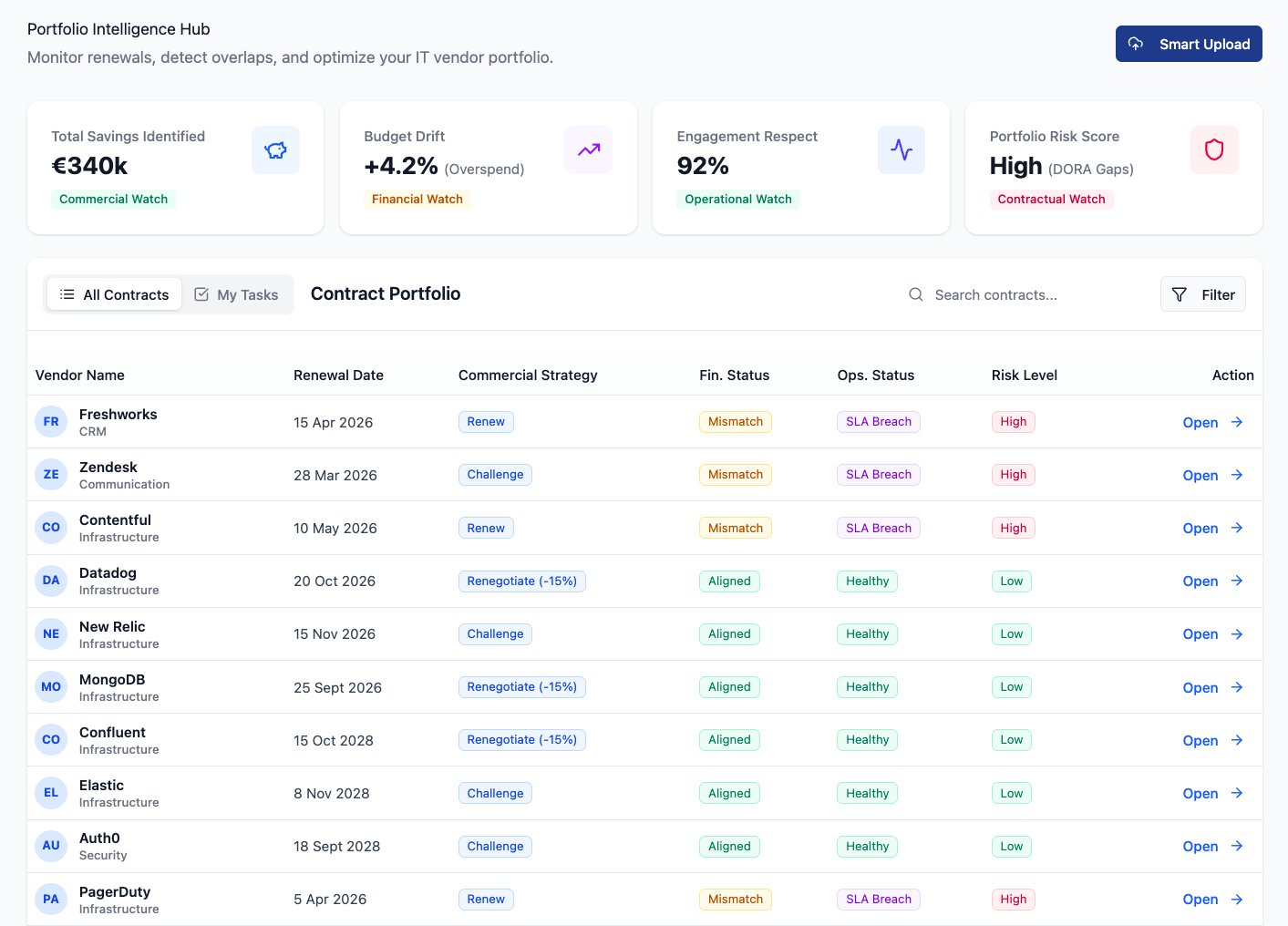
Renew, renegotiate, replace, or stop.
Each contract receives an explicit recommendation - backed by signed contract benchmarks, usage signals, and real exit costs. Not opinions.
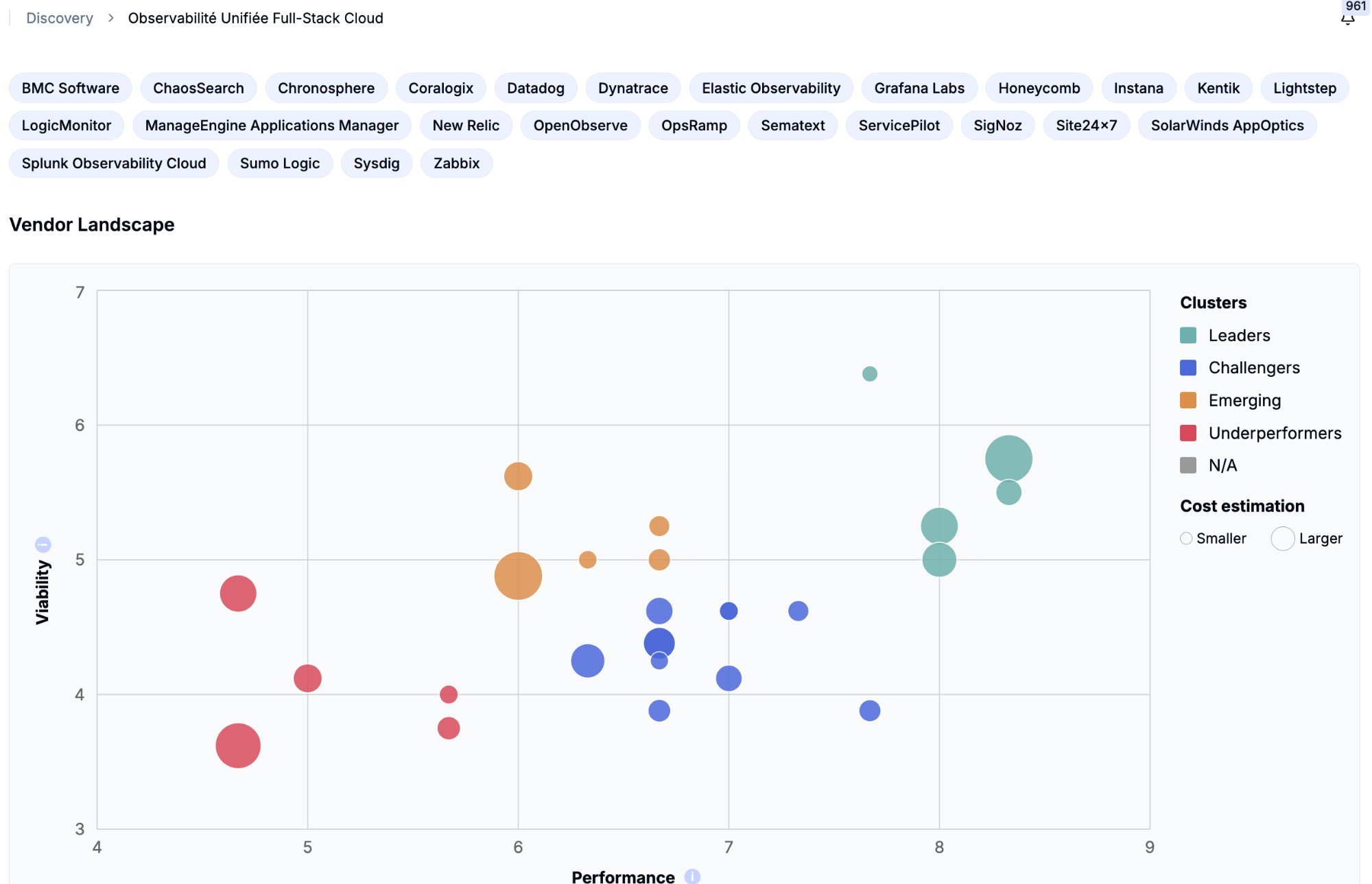
Buy, reframe, or walk away.
Validate the need against market reality. Score vendors on real transaction data. Commit - or stop before wasting time.
Produce market opinions. Decision support, not decisions.
Determines the action: renew, challenge, replace, or stop.
Execute the order and payment.
Gartner provides the information. OnSource provides the decision. Ariba processes the transaction.
SaaS Management Platforms like Vertice, Najar, and Tropic focus on SaaS, price negotiation, and renewals - they intervene after supplier arbitration is done. OnSource intervenes before: we cover all IT segments (software, services, telecom, hardware) and determine whether a contract should be challenged, replaced, or terminated. If the initial decision is wrong, optimizing the price is pointless.
This is the core point. OnSource never recommends an alternative without calculating the net transition ROI - factoring in real costs of integration, training, and security. If the gains don't cover the cost of change, the recommendation is to stay.
Discovery delivers a decision-ready analysis in minutes - not weeks. For Renewal Hub, portfolio onboarding takes a few days. First action recommendations arrive as soon as contracts are loaded.
At minimum: your IT contracts (vendor, amount, renewal date). OnSource then enriches with market data, pricing benchmarks, and usage signals to produce qualified recommendations.
Discover which contracts deserve a real fight - before the next negotiation.
Or write to us: contact@onsource.ai